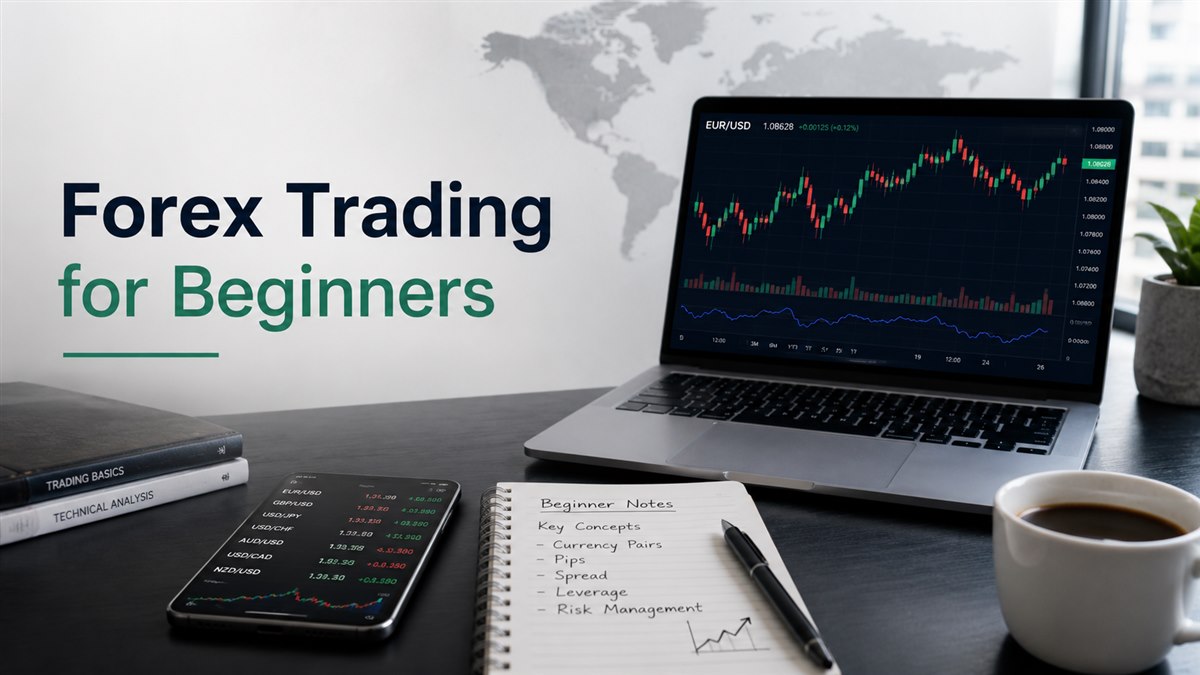
The global foreign exchange market remains the largest and most liquid financial market in the world, with daily trading volumes exceeding $7 trillion. For Kiwis who want to understand this fast-moving environment, the first goal is not to rush into live trades. It is to learn how currency pairs work, how risk is controlled, and how a trading plan protects your capital before real money is involved.
This guide gives beginners a structured path through the 2026 forex landscape. If you are comparing financial platforms more broadly, our guide to the best investment apps in New Zealand is a useful next read. For a wider view of wealth building beyond currency markets, see 10 smart ways to grow your money in New Zealand.
Important: This article is general education only and is not financial advice. Forex trading is high risk, especially when leverage is used. Consider getting personalised advice from a licensed financial adviser before trading with real money.
Understanding the Fundamentals of Currency Markets
Forex trading involves the simultaneous buying of one currency and selling of another. This exchange takes place over the counter across a decentralised global network of banks, financial institutions, brokers and retail traders. The market operates 24 hours a day, five days a week, which makes it highly accessible but also easy to overtrade without a plan.
The mechanism driving forex is the movement of exchange rates. Those rates are influenced by economic data, central bank policy, geopolitical events, interest rate expectations and market sentiment. When you trade forex, you are speculating on the future direction of one currency relative to another.
| Forex Term | What It Means | Beginner Tip |
|---|---|---|
| Currency pair | Two currencies traded against each other, such as EUR/USD. | Start with major pairs because they usually have better liquidity. |
| Pip | A small price movement used to measure gains and losses. | Know the pip value before opening a position. |
| Spread | The difference between the broker's buy and sell price. | Lower spreads reduce trading costs, especially for frequent traders. |
| Leverage | Borrowed exposure that lets you control a larger position. | Use conservatively because it magnifies losses as well as profits. |
The Mechanics of Currency Pairs
Currencies are always quoted and traded in pairs. The first currency listed is the base currency, while the second is the quote currency. In the EUR/USD pair, the Euro is the base currency and the US Dollar is the quote currency. The exchange rate shows how much of the quote currency is required to buy one unit of the base currency.
Major currency pairs dominate global trading volumes. They include the US Dollar on one side and usually feature currencies from the world's largest economies. For beginners, major pairs can be a sensible starting point because they tend to have high liquidity, tighter spreads and more available market commentary.
| Major Pair | Nickname | Why Beginners Watch It |
|---|---|---|
| EUR/USD | Euro Dollar | Often the most liquid pair with tight spreads and heavy news coverage. |
| GBP/USD | Cable | Popular but can move sharply around UK and US data releases. |
| USD/JPY | Dollar Yen | Sensitive to interest rates, risk sentiment and Bank of Japan policy. |
| AUD/USD | Aussie Dollar | Relevant for New Zealand traders because of regional economic links. |
Setting Up Your Trading Infrastructure
Before executing your first trade, build a reliable operational foundation. Your broker, account type, trading platform and risk settings will shape your trading experience from day one.
Selecting the right forex broker is one of the most important early decisions. A reputable broker acts as your gateway to global currency markets. When evaluating options, look for transparent fees, clear spread information, responsive support and regulation by recognised financial authorities. New Zealand traders should pay attention to local regulatory expectations and avoid platforms that make unrealistic profit claims.
| Broker Checklist | What To Look For | Why It Matters |
|---|---|---|
| Regulation | Recognised oversight, clear company details and transparent terms. | It reduces the chance of dealing with unsafe or misleading operators. |
| Costs | Spreads, commissions, deposit fees, withdrawal fees and inactivity fees. | High costs can quietly erase small trading edges. |
| Platform | Stable charts, fast execution, mobile access and easy order controls. | You need a platform you can use calmly in volatile conditions. |
| Risk tools | Stop-loss orders, take-profit orders, margin alerts and account reports. | These tools help keep losses defined before a trade is opened. |
Navigating the Trading Platform
Your trading platform is where analysis and execution happen. Modern platforms offer charting tools, indicators, news feeds, watchlists and automated order types. Spend time learning how to enter, adjust and close positions without hesitation. In fast-moving markets, confusion over a platform button can become a costly mistake.
The Importance of a Demo Account
Before risking real money, every beginner should spend meaningful time in a demo account. A demo account uses virtual funds while mirroring live market conditions. This lets you test strategies, practise order placement, understand spreads and experience volatility without financial consequences. Transitioning to live trading should only happen after you have shown consistency, patience and emotional discipline in a simulated environment.
Mastering Market Analysis Techniques
Successful forex trading requires the ability to interpret market data and form a reasoned view of future price movement. Most traders use technical analysis, fundamental analysis or a combination of both.
Applying Technical Analysis
Technical analysis studies historical price action and trading volume to identify patterns and potential future behaviour. Traders use candlestick charts, trendlines, support and resistance levels, moving averages, RSI and Fibonacci retracements. The aim is not to predict every move perfectly. It is to identify trade setups where the possible reward is worth the defined risk.
Integrating Fundamental Analysis
Fundamental analysis evaluates the forces that can strengthen or weaken a currency. This includes GDP growth, employment data, inflation, central bank interest rate decisions and market expectations. For example, if the Reserve Bank of New Zealand unexpectedly raises interest rates, the New Zealand Dollar may strengthen because higher yields can attract capital. Understanding these drivers is especially useful for longer-term market context.
| Analysis Type | Focus | Useful For |
|---|---|---|
| Technical analysis | Charts, price patterns, indicators and market structure. | Finding entries, exits, support, resistance and trade timing. |
| Fundamental analysis | Economic data, interest rates, inflation and central bank policy. | Understanding why currencies may trend or reprice over time. |
| Sentiment analysis | Risk appetite, trader positioning and market mood. | Spotting crowded trades or conditions where volatility may rise. |
Strategic Execution and Position Management
A trading strategy separates planned decision-making from guessing. Your strategy should define when to enter, how much to risk, where to exit if wrong and where to take profit if right. It should also match your personality, available time and tolerance for volatility.
| Trading Style | Typical Holding Time | Best Fit |
|---|---|---|
| Scalping | Seconds to minutes | Highly active traders who can focus intensely and manage costs. |
| Day trading | Intraday | Traders who want no overnight exposure and can monitor markets. |
| Swing trading | Several days to weeks | Beginners with limited screen time who prefer larger setups. |
| Position trading | Weeks to months | Traders using macro themes and wider risk parameters. |
Calculating Position Sizing
Position sizing is the process of deciding how many units of currency to trade based on account size and acceptable risk. A common professional guideline is to risk no more than 1% to 2% of total account equity on a single trade. The exact number is up to the trader, but the principle is simple: one losing trade should never damage your account beyond repair.
Using Leverage and Margin Carefully
Margin trading lets you control a large position with a smaller amount of capital, which is known as leverage. For example, with 100:1 leverage, a $1,000 margin deposit can control a $100,000 position. This sounds powerful, but it is also dangerous. Leverage can amplify profits, but it equally magnifies losses. Beginners should use low leverage, understand margin calls and never trade a position simply because the platform allows it.
Implementing Ironclad Risk Management
Risk management is the defensive layer that protects your trading account from uncertainty. Even strong analysis will fail sometimes. The point of risk management is to make sure a wrong idea stays a manageable loss, not an account-ending event.
| Risk Tool | Purpose | Beginner Rule |
|---|---|---|
| Stop-loss order | Closes a trade if price reaches a preset loss level. | Set it before entering and avoid moving it farther away in hope. |
| Take-profit order | Closes a trade when the planned profit target is reached. | Use it to avoid turning a winning trade into an emotional decision. |
| Risk-to-reward ratio | Compares potential loss with potential gain. | Avoid trades where the upside is too small for the risk taken. |
| Trading journal | Records entries, exits, reasoning, emotions and mistakes. | Review it weekly to find patterns you cannot see in the moment. |
The Role of the Stop-Loss Order
A stop-loss order is an instruction to close a position when price reaches a specific level. It is one of the most important tools for serious traders because it defines the maximum planned loss before emotion takes over. A stop-loss should be placed at a logical level based on your analysis, not at a random number that merely feels comfortable.
Securing Profits with a Take-Profit Order
A take-profit order closes your position when price reaches your planned target. This removes the temptation to hold a winning trade forever, only to watch the market reverse. By setting clear risk-to-reward expectations, such as risking $100 to target $200, you create a structured approach instead of reacting trade by trade.
Developing the Right Trading Psychology
The psychological side of trading is often the hardest part for beginners. The forex market exposes fear, greed, impatience and overconfidence. A trader can have a reasonable strategy and still lose money if they abandon rules during live execution.
Good trading psychology starts with accepting that losses are part of the business. Focus on following your plan, not on being right every time. Keep a detailed trading journal, note your emotions and review whether each trade followed your rules. Over time, this practice helps you identify destructive habits and develop the discipline needed for consistent decision-making.
Final Thoughts
Forex trading can look simple from the outside because every trade is just a buy or sell decision. In reality, successful trading requires preparation, self-control, risk management and patience. Start with education, practise in a demo account, learn one strategy deeply and keep your position sizes modest. The goal for beginners is not to chase quick wins. The goal is to build a repeatable process that can survive both winning and losing streaks.